
Adapting the recorder to the rhythm of a classroom.
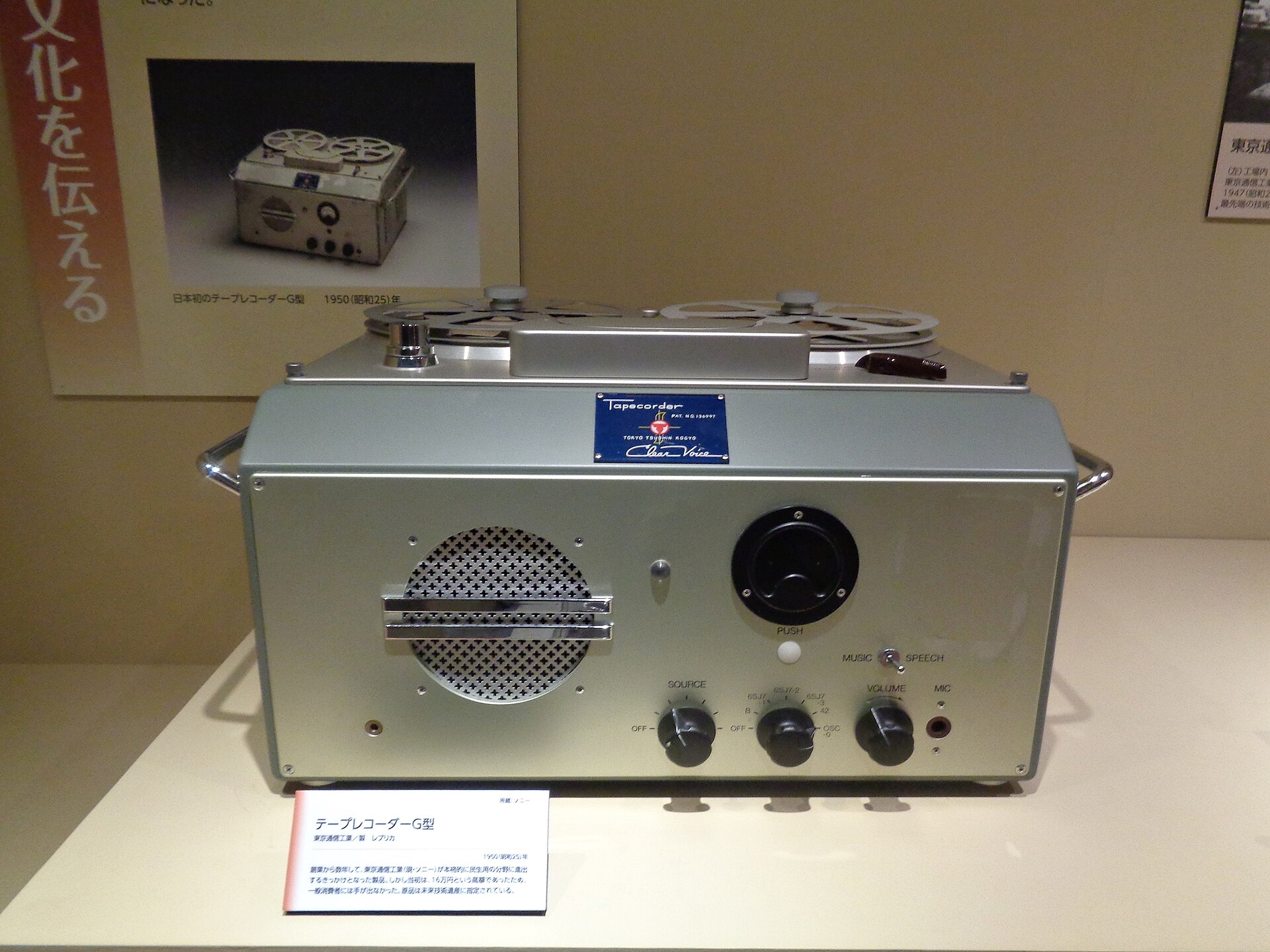
The next H type weighed 13 kg and cost 84,000 yen. It was released in March 1951. Nobutoshi Kihara and others recreated the technology, and Sori Yanagi was in charge of the design. Ibuka's ideas were not brought to fruition by one versatile inventor, but by the work of people with different specialties.[2]
Bruno Plus / Wikimedia Commons / CC BY 4.0
Displaying machines alone was not enough to spread the word to schools. Masao Kurahashi and his colleagues, who were involved in sales, worked with teachers to explore ways to record broadcasts and use them in classes, expanding opportunities for classes. The manufacturer stationed engineers in rural areas and set up a service to visit customers. Together, we developed a way to use it and a support that would allow it to continue to be used.[2]
Class times and broadcast times do not necessarily match. If the sound can be saved through recording, teachers can play it back at their convenience during class. For the first time, the machine's functionality is translated into value that restores the user's time. This view is derived from this paper's understanding of the process of dissemination of social history.
If we say that the problem was solved just by downsizing, then we've lost half of the work. Even if a product is lightweight, if its purpose is unclear, it will not be introduced, and even if it has a purpose, if there are high concerns about operation or failure, its use will not continue. Design, sales, education, and maintenance were different parts of the same experience.
Of course, visits and classes cost money. It is not possible to apply the same amount of care to every product without limit. Rather, the challenge is to identify the concerns that are stopping the introduction of the technology and focus support there. Rather than asking about the characteristics that the seller wants to explain, listen to the reasons why the buyer is not willing to take the plunge. The sequence connects this case to the present.
伝Interpreting YAMATO DENSHI
Wider adoption means enabling more people to use the technology.
If you only look at the number of units sold, training and maintenance seem like peripheral work. However, with new tools, these become a prerequisite for purchasing. When you imagine the first week after installation, you can see the support that the product lacks.