
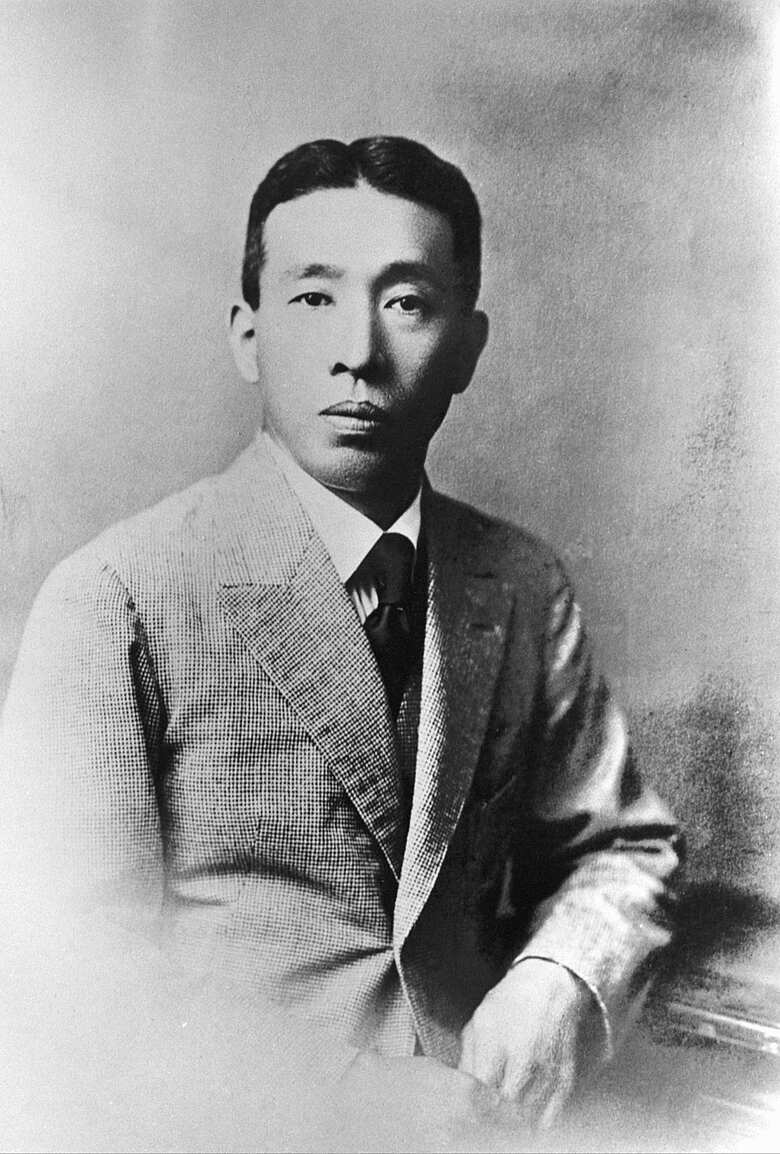
Shinjiro Torii|Born January 30, 1879 (Meiji 12)
A 3-page feature based on public historical records
The product was finally ready. Customers still did not choose it.
The more time you spend working on something, the more you want it to be rewarded the moment you put it out into the world. However, the day of completion that the creator has been waiting for and the day when the user recognizes the value are not necessarily the same.
Shinjiro Torii was born in Osaka in 1879. In 1899, he opened Torii Shoten and developed his business in Western liquor.[1][2] Eventually, I took on the challenge of making full-scale whiskey in Japan. In 1923, construction of a distillery begins in Yamazaki.[2]
The white tag released in 1929 was not as well received as expected. Suntory's history shows how close it is to the tastes of Japanese drinkers.[3] The best technology and the choice of the drinker. In between, there was still a gap to be filled.
The story should not be reduced to the will of one genius. The challenge of producing domestic whisky, in part, was due to the skills and work of Masataka Taketsuru and others.[1] We take what many people have accumulated and make it into a flavor that reaches the people who drink it. This work continued even after the product was released.
伝Interpreting YAMATO DENSHI
Effort invested does not necessarily equal customer satisfaction.
The creator must be honest about how hard he worked. However, what the customer receives is not the hardships of production itself. When you are not appreciated, don't deny your efforts and don't deny the experiences of others. Maintaining both will be the starting point for the next improvement.