
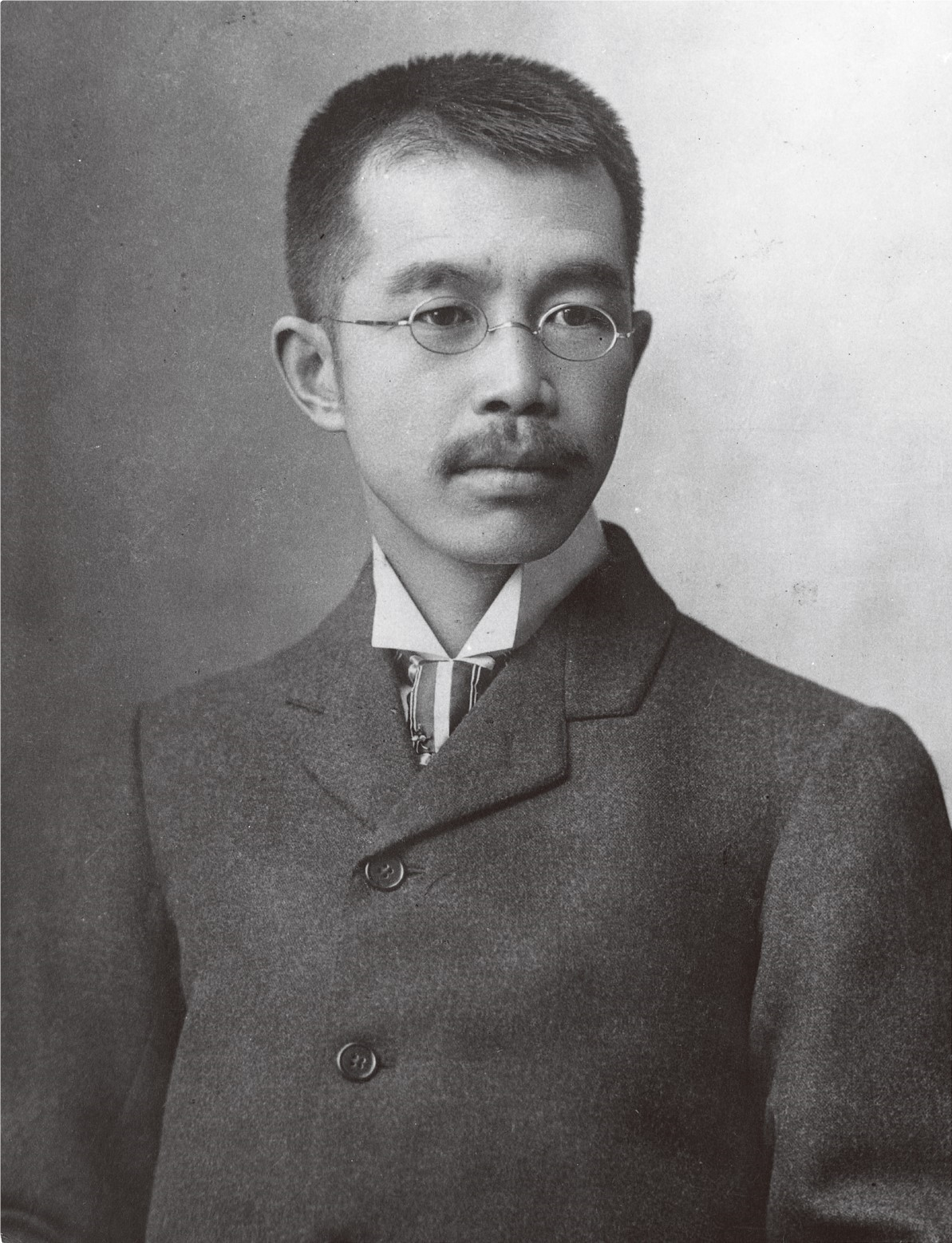
Cover photo: Hitachi Ltd. / Wikimedia Commons / Public domain. The image size has been adjusted for display purposes.
Namihei Odaira | Founder of Hitachi, Ltd.
A 3-page feature based on public historical records
Seeing the potential to manufacture in the work of repairing machines.
Every time the machine stops, we repair it and start it again. This is an important job that protects the production in front of us. However, another question lurks in the same scene. Why this structure? What can we change if we design it ourselves? Namihei Odaira's starting point was at the border between repair and manufacturing.
According to the City of Hitachi's account, Odaira joined the Hitachi mine in 1906 and became head of its engineering section. His work then involved repairing imported machinery used at the mine. Building on that experience, he pursued domestic production of electrical machinery. The founding in 1910 should be distinguished from incorporation as an independent company in 1920.[1]
Imported machinery is also a proven option. If we choose domestic production, we will be responsible for dealing with design errors, component variations, and failures. Just because the product is domestically produced does not mean the users will accept the risk of it being shut down.
That's why the repair site has meaning. By looking at parts that didn't move, parts that wore out, and discrepancies between usage conditions and design, questions that can't be asked from looking at the finished product's appearance arise. This is not an explanation that recreates Odaira's thoughts, but rather an examination of the business implications of moving from repair to manufacturing.
If we simplify Odaira's challenge to "he hated foreign products," the learning process disappears. Work with existing machinery to deepen your understanding, and then assume responsibility for design and manufacturing. Independent technology is not a state in which we do not learn from outsiders, but rather a state in which we can trace the reasons for problems using our own words and drawings.
伝Interpreting YAMATO DENSHI
Repairing a machine opens a path to learning.
Fault records are not closed by on-the-spot recovery. If you identify the cause, usage conditions, and changes to prevent recurrence, your experience in repairing the problem will be transferred to the next design. The starting point is to transform the knowledge accumulated in personal intuition into material that others can consider.