
Transforming imported machinery into proprietary technology.
According to an explanation by the Japan Society of Mechanical Engineers, in 1953, in the process of improving an American-made machine introduced in 1950, they developed an in-house mechanism for intermittently planting interlocking parts. This is YKK's first patent. Importing and independent development were not opposing options here, but a continuum of tasks.[2]
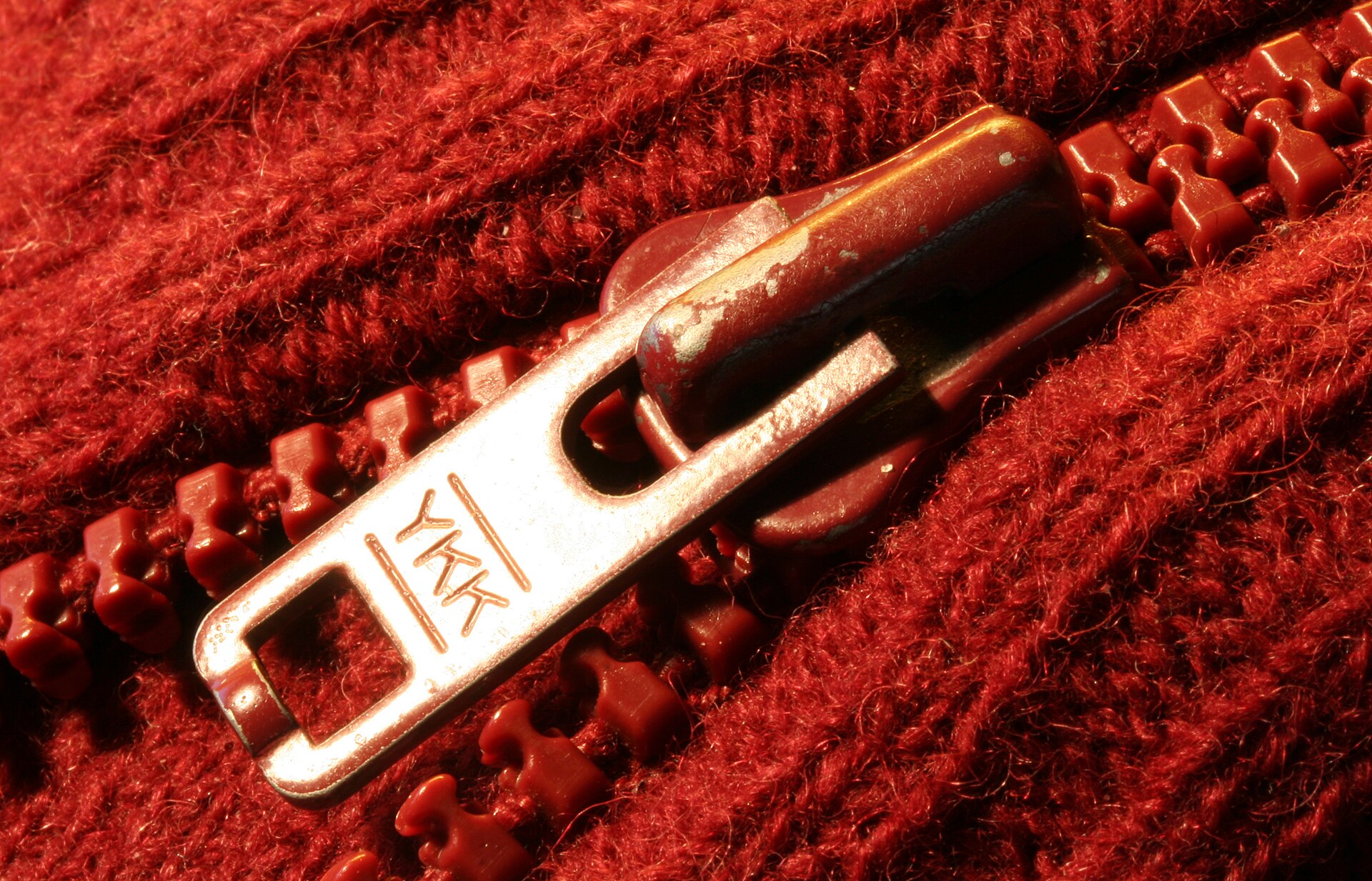
Cornischong at lb.wikipedia / Wikimedia Commons / CC BY-SA 3.0
In 1959, the CM3 model, completely developed in-house, was born, and in 1964 production of its successor, the CM6 model, began. The academic society credits the improved machinery and integrated manufacturing from materials as contributing to both quality and price. The focus was on manufacturing capabilities that could not only be moved quickly, but also be repeated with the same quality.[2]
Here, the job of a manager cannot be reduced to inventing the details of a machine alone. Engineers working on improvements, people handling materials, and on-site staff to check manufacturing conditions are needed. Bringing individual processes closer together has the meaning of not losing sight of the causes of problems within departmental boundaries.
However, bringing processes in-house does not automatically create cooperation. The conditions that are easy for the material department to use may differ from the conditions required by the processing department. Unless we share the evaluation of the final product and see together where the losses are occurring, separate walls will form within the company.
Yoshida's case should not be read solely based on the luxurious facilities. We move from the stage of mastering the purchased technology to the stage of understanding how it works and changing the necessary parts. It is only through this accumulation that the expenditure on equipment changes into the remaining design ability.
伝Interpreting YAMATO DENSHI
Buying a machine should begin the learning, not end it.
If you record the defects after installation, the adjustment time, and the reason for the stoppage, you will be able to see where to change next. When evaluating capital investment, consider not only the processing volume but also whether the cause can be explained at the site.