
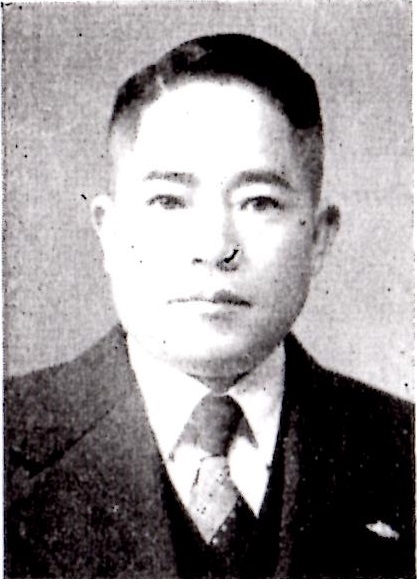
Cover photo: Kitanihon Shimbun / Wikimedia Commons / Public domain. The image size has been adjusted for display purposes.
Tadao Yoshida | Founder of YKK
A 3-page feature based on public historical records
A defect in a tiny component can bring an entire product to a standstill.
It's difficult to use clothes and bags if you can't open and close the zippers. Even if it is not a component that is noticeable from the outside, the defect will directly affect the evaluation of the product as a whole. When thinking about Tadao Yoshida's work, I would like to first consider the relationship between small size and large responsibility.
YKK's history dates back to 1934 when San-S Shokai was established in Tokyo. The starting point was processing and selling zippers. In 1950, four American-made chain machines arrived, and the company then moved on to producing machines domestically. The scope of the business expanded to include materials and manufacturing processes.[1]
Businesses that buy, prepare, and sell finished products and businesses that own their own materials and machinery have different problems to take on. The latter requires capital for equipment and specialized human resources. Even if orders decrease, the cost of maintaining machinery remains. Moving upstream has both the advantage of being able to reach quality and the risk of burdening it.
If the performance of the purchased machine is high, that alone may be enough to make immediate improvements. However, if other companies can also buy the same machine, the scope for making a difference is limited. The next challenge is to understand which processes affect the product's outcome and to have the ability to change those processes.
This does not mean that all companies should go in-house. In some cases, you may be able to get better results by partnering with outside experts. The question I want to ask from Yoshida's history is whether your company is in a position to trace back to the cause and improve the quality you promised to your customers.
伝Interpreting YAMATO DENSHI
Aligning responsibility for quality with the ability to improve it.
If you only ask suppliers for explanations every time a problem occurs, there may be a gap between the promise you make to your customers and your company's capabilities. It is worth reviewing your own processes and the processes you improve jointly with your business partners from the perspective of their impact on quality.