Resignation is an outcome that cannot be taken lightly.
Amid the management crisis and labor disputes of 1950, Kiichiro resigned as president. The company's history describes the difficult circumstances that led to resignations and wage cuts.[4] If you dismiss it with one line, ``The founder stepped back and solved the problem," you won't be able to see the people whose lives have been changed.
Even if you are willing to accept responsibility, you will not be able to secure all the desired results. This incident teaches us the need to separate the determination of management from the results of management. Having respect does not mean getting rid of bitter truths.
Go to the scene. Know the troubles. Return to work structure. And face the results. This back and forth cannot be replaced by a title alone.
Even if the job of the future isn't necessarily making cars, there will still be situations where you can provide value to someone. How involved are you in what happens next? Kiichiro's life makes us think not only about the technology used to create products, but also about our responsibilities after handing over products.
What you take home from this life.
Until you sell it
Make it your own job.
- Don't take your eyes off the scene of the problem.Stand by the broken down car. User problems can become clues for creating the next level of quality.
- Look at the flow of the whole rather than the speed of the parts.Will the necessary items reach the necessary processes? Have a perspective on organizing work connections.
- Even the bitter decisions are left behind as lessons learned.Management crises and resignations are part of the history of our founding. Only by recording both the achievements and burdens can the experience live on.
Responsibility does not end at the moment of completion. Connect what happens in the future to the next improvement.
Take the wisdom you read and take a step forward today.
Ask one customer what happened after receiving the product.
Please select one document, product, or request that you have recently given. Once the other person starts using it, think about where they are likely to stop, and if possible, ask them one question.
Open hint to think about
Rather than "Are there any problems?", asking "Where did you first get lost?" will bring you closer to the specific situation. Let's put what we found back into the process so that the next person doesn't get lost.
Historical materials and editing
This is a special feature on people based on publicly available historical materials. Events recorded in the history of the company and discussions by YAMATO DENSHI are separately recorded. New interviews with the individuals themselves and conversations by YAMATO DENSHI are not reproduced.
- 75 years of Toyota history "Kiichiro Toyoda until graduation from university"
- 75 Years of Toyota History "Quality and Detailed Explanation"
- 75 Years of Toyota History: The Roots of Automation and Just-in-Time
- 75 years of Toyota history: President Kiichiro's resignation
- Toyota's 75-year history "The death of founder Kiichiro Toyoda and Risaburo Toyoda"
- 75 Years of Toyota History "Comprehensive Chronology 1931–1940"
Confirmation date of historical materials and images: October 11, 2026
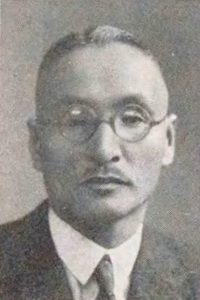
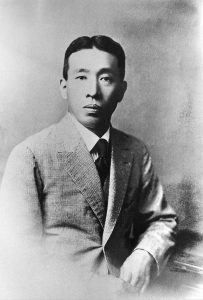
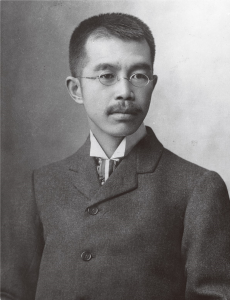
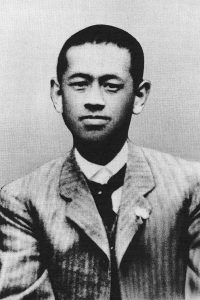
Source of portrait photo
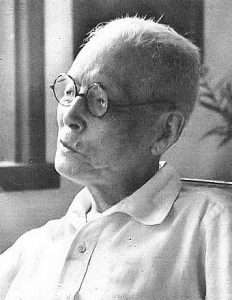
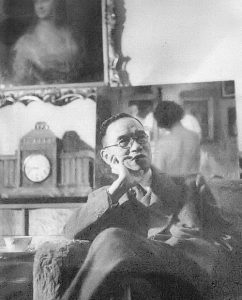
Kiichiro Toyoda, before 1952. Photographer unknown. Historical photos taken from the 75-year history of Toyota Motor Corporation.
Photographer unknown / Wikimedia Commons/Image source / PD-Japan-oldphoto(No modification of photo content)
Sources and references
- 75 years of Toyota history "Kiichiro Toyoda until graduation from university"
- 75 Years of Toyota History "Quality and Detailed Explanation"
- 75 Years of Toyota History: The Roots of Automation and Just-in-Time
- 75 years of Toyota history: President Kiichiro's resignation
- Toyota's 75-year history "The death of founder Kiichiro Toyoda and Risaburo Toyoda"
- 75 Years of Toyota History "Comprehensive Chronology 1931–1940"

伝Interpreting YAMATO DENSHI
Do not minimize suffering to magnify a leader’s achievements.
What YAMATO DENSHI wants to leave behind in his biography is not a hero without failures. Whose lives are affected by this judgment, what cannot be protected, and what can we learn from it? By reading to the difficult ending, the word "responsibility" ceases to be a cool signboard.