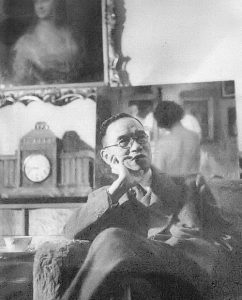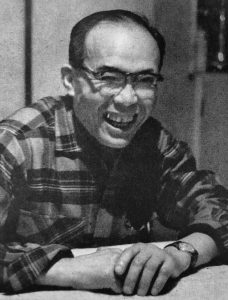

A chair stood at the entrance to the workshop. Its seat had rounded corners, and its armrests bore the traces of countless hands. “I knew straight away that my father had made it.” The day the second-generation owner welcomed that chair back marked a small beginning: a chance to reconsider the company’s work.
CHAPTER 01
Behind the marks,
I saw a life.
What led you to focus more on repairs?
When I first took over the company, all I thought about was making new furniture and reaching more customers. Launch new pieces. Grow sales. I thought that was my role.
One day, a customer brought in an old chair, bought when my father ran the business. Its legs were loose. “I thought about replacing it, but I’d rather repair it and keep using it.” When I asked why, the customer said they loved sitting in that chair every morning and talking with their family.
To us it might be just one chair, but to that person it held years of living. The scratches and changes in color were evidence of use. Looking only at the sales figures, I had missed everything that happened afterward.
“I don’t want the day we deliver a piece of furniture
to be the day our work ends.”
CHAPTER 02
Deciding together
what to keep.
Has doing repairs changed the way you work?
At first, I tried to restore things to look as new as possible. Then someone asked me to leave a particular scratch. Their child had made it when they were small. That taught me that what looks beautiful to us is not always what a customer treasures.
Now, before starting, I ask what is difficult to use and where the piece is used. Then we discuss what to repair and what to leave. Decisions affecting structural strength cannot be based on appearance alone. I explain in advance what can be done safely and what would be difficult.
Of course, we cannot repair everything. Sometimes the cost approaches that of a new piece. Even then, we explain the reasons and let the customer choose. I believe that time spent talking is part of our work too.
Does that feed into making new furniture as well?
It does. Furniture that comes back for repair shows us what happens after it is used. Is this where the stress falls? Could it last longer if this part were replaceable? Things we could not learn simply by thinking inside the workshop feed back into our next designs.
CHAPTER 03
Work that can be passed on
to the next owner.
What future would you like to leave for the workshop?
I don’t want our experience with repairs to live only in the memories of a few craftspeople. We record the materials, the steps and even our doubts, so younger people can read them too. The feel of working with your hands cannot be conveyed on paper alone, but the path of your thinking can. I want us to work side by side, with those records to guide us.
Once, when I returned a repaired chair, a customer said, “One day, I’d like to give it to my child.” I still cannot fully picture the world a hundred years from now. But making the chair in front of us ready to be passed on—that is something we can start today.
Perhaps a company is the same. Rather than trying to finish everything in our own generation, we can leave room for the next person to make their own changes. That is how I hope to pass on the work I received from my father.