
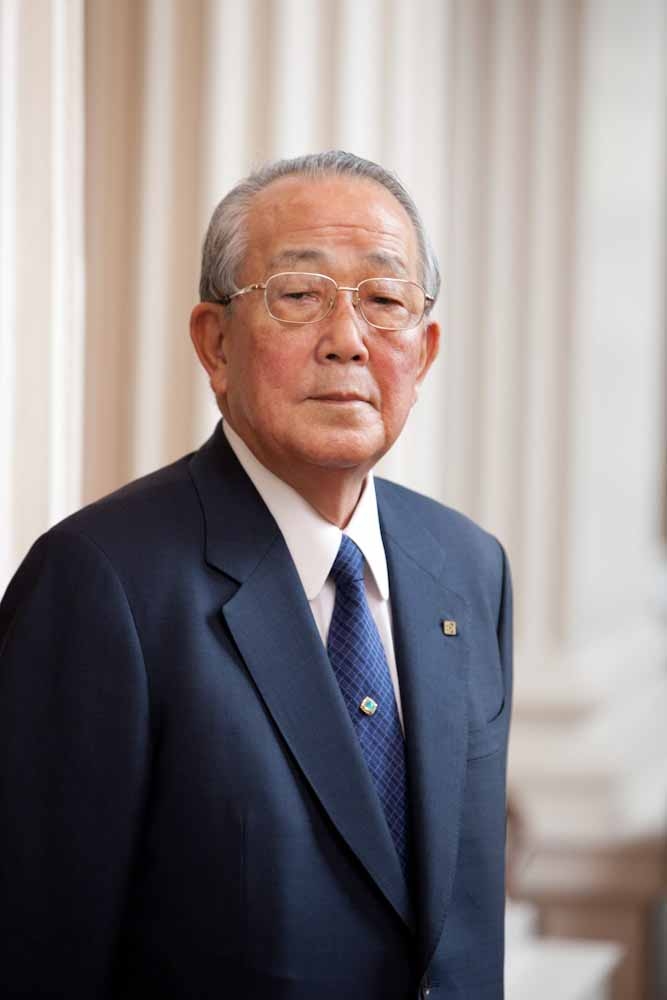
Cover photo: Conrad Erb/Science History Institute/ Wikimedia Commons / CC BY-SA 3.0. The image size has been adjusted for display purposes.
Kazuo Inamori|Kyocera Founder
A 3-page feature based on public historical records
A founder’s dream does not automatically provide employees with security.
Bringing new technology to the world. For founders, a company may be the place to make their dreams come true. However, those who join the company have their livelihood and family's future in mind for the next year. Kazuo Inamori's business history is marked by scenes where these two times collided.
According to Kyocera's public documents, in April 1961, 11 young employees who joined the company after graduating from high school demanded guarantees of future raises and bonuses. As his workload increased and he continued to work overtime and work on holidays, he became worried about the future of the company. He also indicated that he would resign if his demands were not met.[1]
The discussion between Inamori and the employees lasted several days. The document explains that after this incident, the company reconsidered whether it was okay to think about the company's purpose solely in terms of the founder's technological dreams. It was in 1967 that the company's management philosophy, which emphasized the material and spiritual well-being of its employees and its contribution to society, was officially established.[1]
I don't want to reduce the conflict in 1961 and the establishment of the ideology in 1967 to a momentary event. There is a period of time between having a shocking discussion and translating its meaning into the words of the organization and establishing it in management.
Also, it is not enough to read this story only as a beautiful story about how an employee's dissatisfaction was resolved through passionate persuasion. The employees' requests were also for information that alerted them to dangers in their lives that management had not seen. Don't assume that the person who raised the objection is immature, but look at what they are worried about because they can't predict what they're doing. Without that attitude, the same transformation will not occur just by borrowing the words of the ideology.
伝Interpreting YAMATO DENSHI
Objections reveal differences in purpose.
Don't treat what your employees want as just a negotiation over the amount. There may be a combination of concerns about future prospects, fairness of burden, and lack of explanation. After the discussion, I would like to see what changes have been made to the system and connect the dialogue to work.